6 March 2026
How To Create A Customer Journey Map That Improves Customer Experience


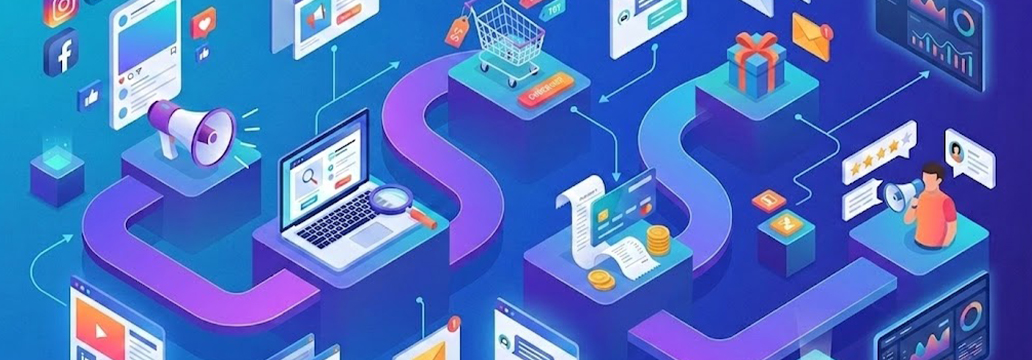
In today’s cluttered online space, brands no longer win by simply being visible. They win by being relevant at the right moment. Customer journey mapping helps marketers to systematically note the customer journey and optimize the promotional efforts accordingly. At Think First Digital, we believe that understanding how people move from curiosity to commitment is the backbone of impactful digital marketing.
Every minute detail from a search query to a social media post can influence how a potential customer perceives your brand. When these moments are thoughtfully aligned, they create momentum. However, when they are abrupt and disconnected, the opportunities are lost.
Why the Customer Journey Matters More Than Ever
A customer's journey is influenced by various factors and it isn't a linear journey. People discover brands, evaluate options, compare alternatives, hesitate, return, and then decide. Ignoring this reality leads to fragmented messaging and weak conversions.
A strong digital marketing strategy focuses on understanding intent at every stage. Instead of pushing the same message everywhere, brands can deliver content that genuinely helps, informs, and reassures. This is the core of a well-designed digital marketing customer journey.
When journey mapping is done right, it improves not just conversions but the entire customer experience.
What Is Customer Journey Mapping?
Customer journey mapping is the process of visually outlining how customers interact with your brand from first touch to long-term engagement. It combines data, observation, and empathy to tell the story of your customer’s experience
Customer journey mapping is a lot more than just a diagram or a flowchart. It precisely highlights what customers are thinking, feeling, and expecting at each stage. It highlights friction points, missed opportunities, and moments where trust can be strengthened.
Core Elements of an Effective Journey Map
A meaningful customer journey map is built on clarity, not assumptions. Here are the essential components.
- Customer Personas
- Stages of the Journey
- Touchpoints and Channels
Customer personas are simply semi-fictional profiles reflecting key segments of the target audience. These are built from market research and real customer data, detailing demographics, behaviors, goals, pain points, and motivations to help businesses understand, market to, and develop products for specific customer types.
Generally, the customer journey follows a certain path. It begins with awareness of the brand. Gradually, the prospect learns more about the brand. After this, the prospect develops a wish to buy the product/ service. The next step is to evaluate the available service. The last step is the decision-making and actual buying of the product. These stages give structure to the journey and help align content with intent.
Touchpoints are simply all the moments where a customer comes across your brand. It could be the first time they land on your website, a paid ad that catches their attention, an email they open, a WhatsApp message they reply to, a conversation with customer support, or even a review they read before making a decision. A comprehensive overview on the touchpoints helps marketers to understand the customer behaviour and fill in the loopholes effectively.
How to Create a Customer Journey Map That Actually Works
Understanding how to create a customer journey map requires both analysis and creative imagination. The process should be collaborative and data-driven.
Initially, begin by mapping real customer journeys and not ideal customer journeys. This will help you to understand the actual conditions and loopholes around your promotional efforts.
It is suggested to use analytics, CRM data, feedback, and sales insights. Then ask practical questions at each stage:
- What problem is the customer trying to solve?
- What information are they looking for?
- What could cause doubt or hesitation in their decision-making?
Next, align your messaging, creatives, and channels accordingly. This ensures your marketing strategy supports the customer instead of overwhelming them.
Journey Mapping in Digital Marketing Execution
When journey mapping is integrated into execution, digital marketing services become more focused and effective. A holistic approach helps to fill the gaps effectively. For instance, paid campaigns address awareness gaps, content marketing educates the prospects and retargeting helps in generating sales. Additionally, email and CRM assist in the retention of customers.
Final Thoughts
Customer journey mapping is not a one-time exercise. It evolves as customer behavior, platforms, and expectations change. Brands that invest time in understanding journeys build trust, loyalty, and long-term value.
At Think First Digital, we help brands see through the eyes of their customers and design journeys that feel natural, helpful, and human. Because when marketing thinks first about the customer, growth follows naturally.